|
All
materials appearing in this Korczowski web site are under protection
of international copyright laws. No painting may be reproduced, copied,
stored, manipulated or used whole or in part of a derivitive work, without
the written permission of Korczowski. All rights reserved. |
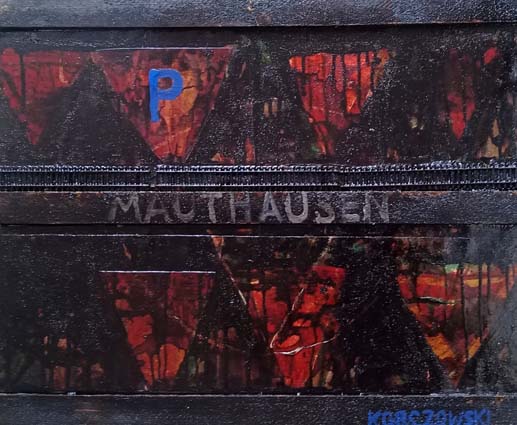
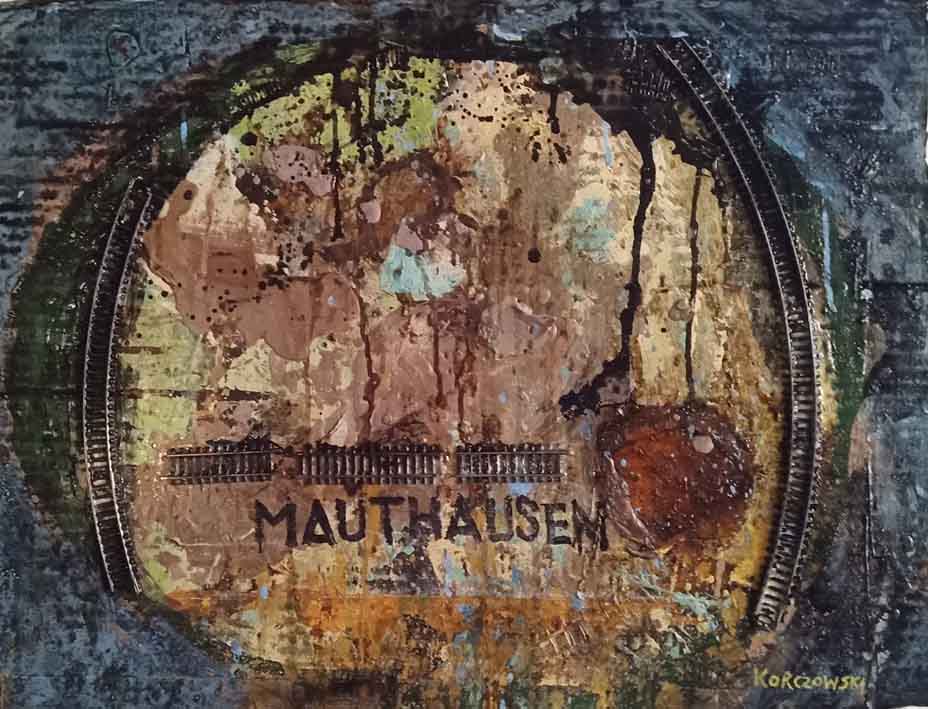
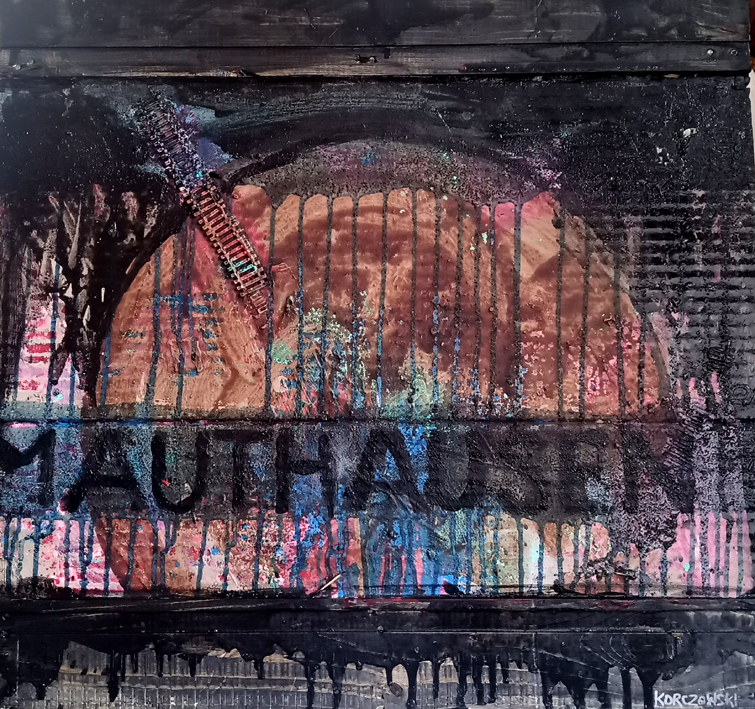
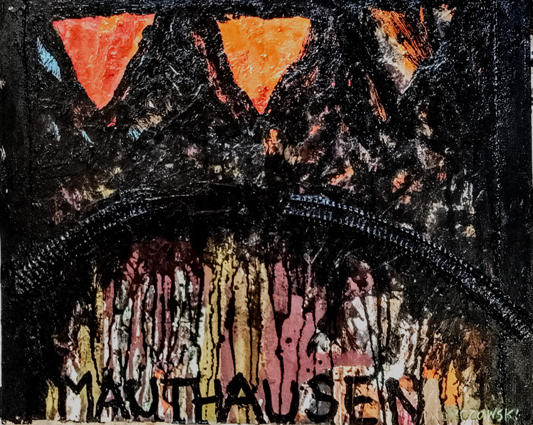
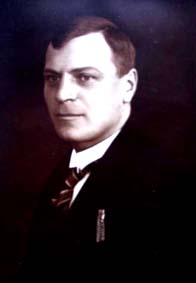
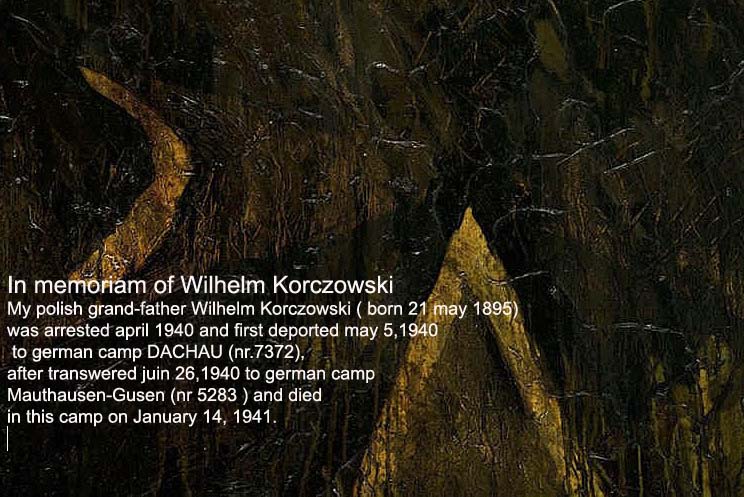
My Polish Grandfather,
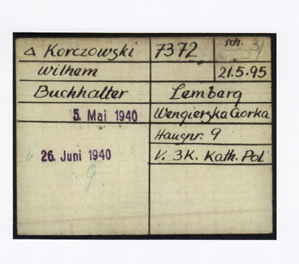
Wilhelm Korczowski,
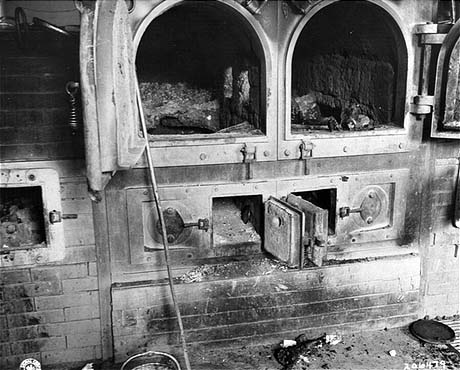
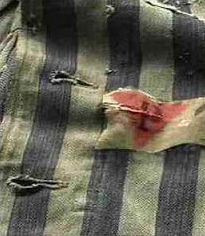
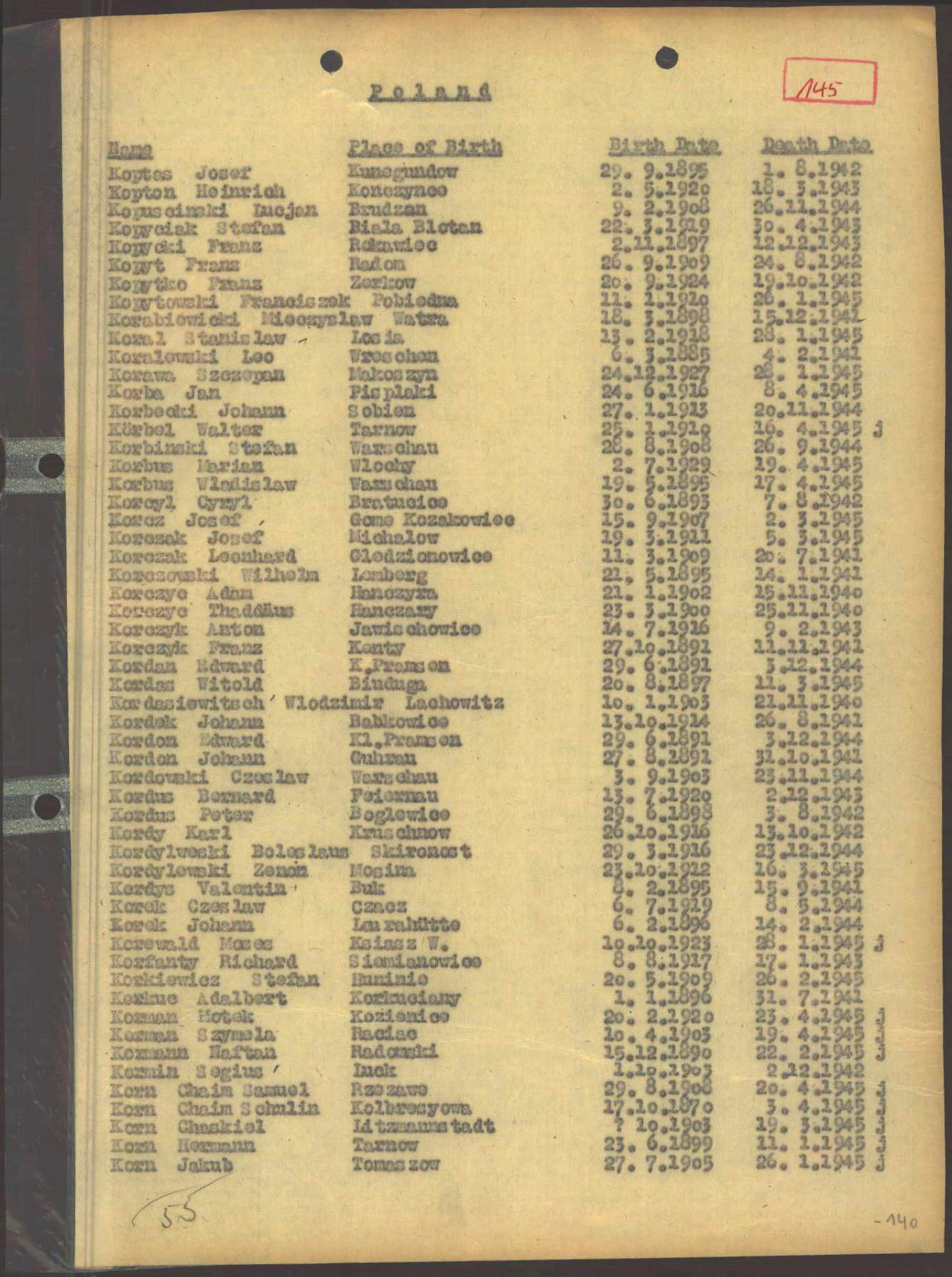
died in the german concentration camp at Mauthausen-Gusen on January 14, 1941.
|
|
|
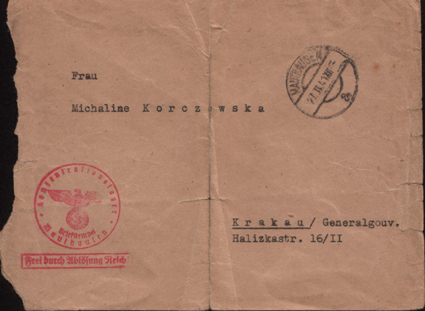
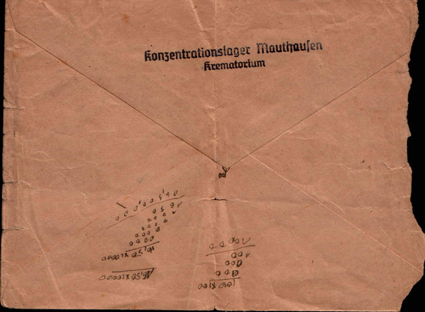
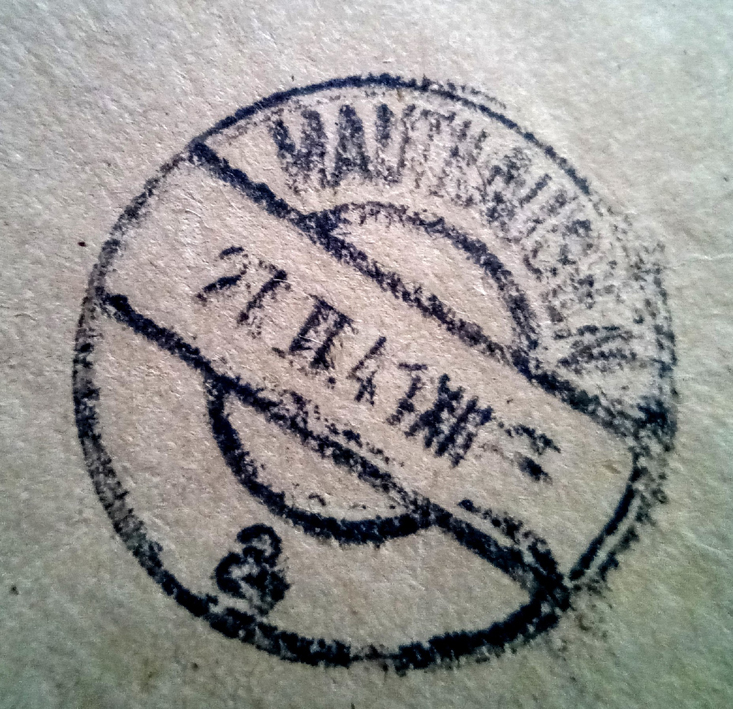
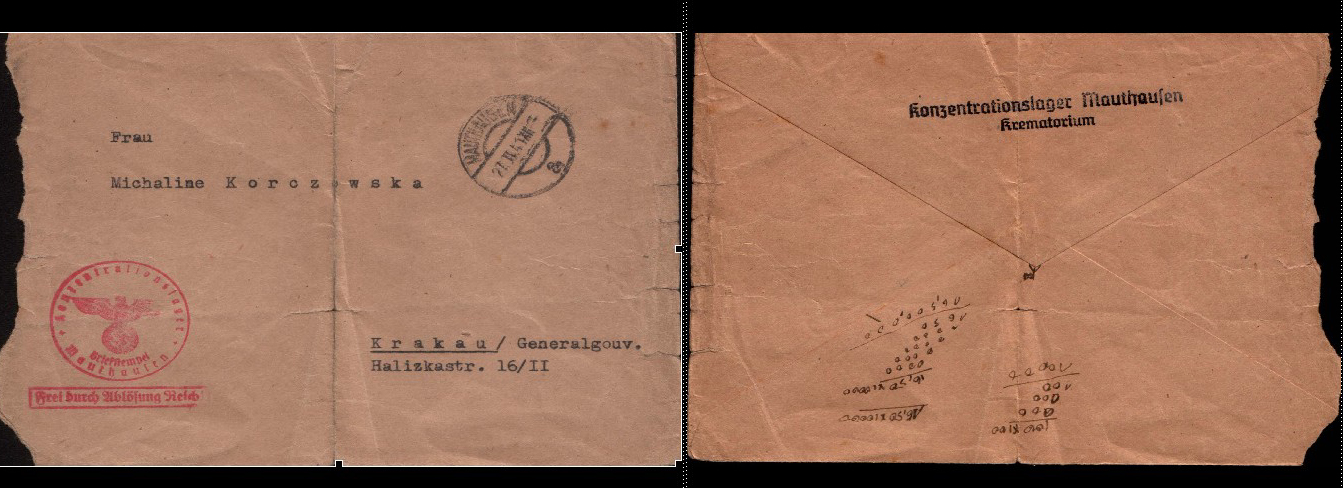
"Letter" to my grandma from Mauthausen Krematorium 1941
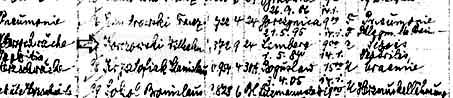
DETAIL FROM PAGE 47 OF THE ORIGINAL "TOTENBUCH GUSEN" January 1941
copie from: Mauthausen Museum
|
from :"Frank
Nr 18" Based in Paris, where culture, language, history, and creative energy all converge, Frank has published over 1000 writers, poets, translators, and visual artists from over 35 countries since the early 80s. Deeply committed to the increasingly-important need to combat ethnocentricity, Frank publishes fiction, poetry, cultural interviews, and compelling art from wherever people create. Frank Editor: David Applefield "The
Only Way Out Against Nothingness"* Bogdan Korczowski: Poland, its Jewish past, Technocracy, Painting, and the Logic of War... Selected moments from a long talk with David Applefield, soon to be a book. Bogdan Korczowski is a painter from Krakow who is lived in Paris for twenty years. His grandfather,Wilhelm Korczowski, a political prisoner, died in the concentration camp at Mauthausen on January 14, 1941. The
incredible part about violence created by humanity is that it doesnīt
come out of nowhere. It always comes from advanced thinking, from cutting
edge technology. The burning of books in early Nazi Germany first required
a "knowledge" of literature. To determine that a book was "rotten," one
had to know what was in it. This was the work of Cultural Commissions,
appointed experts, careful deliberation. The recent war in Kosovo began
with the elimination of Albanian literature ten years earlier, the ousting
of professors, the closing of libraries, the censorship of newspapers,
the shutting down of television stations. The same in South Africa, Cambodia,
and elsewhere. It always starts with the repression of writing. Culture
always originates with the written word. And totalitarianism and fascism
always depend on the professional destruction of culture. The logic of war is the end of the world, the end of civilization. The moment that the first warrior in time built his first weapon marks the beginning of "high-tech." The F-16 is a Roman chariot. That there are no more Jews in Poland today is a tragedy. We donīt speak of the same war history in Krakow as in Paris or elsewhere in the world. In France, how many tens of thousands of Jews perished in the Second World War? In Poland, we speak of millions, of hundreds of villages, of entire neighborhoods. Not just the people on one street or in a particular building. War erased an entire civilization. The historical questions we tend to ask ourselves here, today, in Paris or New York tend to be absurd. We shouldnīt forget that in Paris during the war, the theaters remained open, Picasso was building his career and successfully selling his paintings, Jean-Paul Sartre was writing and staging his plays. Life continued to exist in Paris. In Poland, Bruno Schulz, the greatest artist of his generation, a Polish-Jew, was shot in the head in the street like a dog. Culture ceased to exist. Houses were burned. Weīre talking about annihilation. Poland lost everything. What was recovered? Ruins. Look at Warsaw after the war. Warsaw in 1945 was a field of ruins. Paris was always Paris. The Germans came to Paris to visit the Eiffel Tower and the Louvre. Germans didnīt come to Poland to visit the museums. Hate, you mention? No, not hate. Iīm far from being consumed by hate. For me all that matters is to understand. Itīs not a question of turning the page, of getting on with it. Itīs a question of looking reality in the face. Thatīs why I say that today, Germany is a country like any other in the European Union. I went to see the Holocaust Museum in Washington, D.C. At the end of the exhibition, it was very very painful for me, as a Pole, to revisit the Pogroms of 1946. I admit, it was a real blow, it was not the Poland I wanted to believe, but it was the truth. The museum is excellent because it depicts for future generations history as it was. The danger of story-telling always comes from the confusion and manipulation of interpretation. This is what concerns me. Even a powerful vehicle like the Internet today, where one can state anything to anyone and reach hundreds of thousands, ridicule or exaggerate anything with convincing credibility, reinforced with technology and design, requires our constant concern. The tool is miraculous, but the use of human suffering to manipulate fact and distort understanding, is a crime. The way we remember and the way we tolerate and form opinions must be our primary concern. There is something innate in humanity that requires us to be vigilant. We need to assume the reflex of a watchdog. Weīve seen genocide. We know that atrocities originate with a thought-process. We know what Pol Pot succeeded in doing in Cambodia, we saw what happened in Rwanda, we witnessed the bestiality in Yugoslavia. Violence, on this planet, thrives. I donīt want to over-philosophize on the origins of violence - being human simply means that, being human - but we need to perpetually keep watch. The challenge is to know how to keep watch? Through education. If we tell the truth in our museums, our paintings, our newspapers, our exhibitions, if we tell how humanity arrived at Auschwitz, maybe we can create a generation of people with a different logic. If we say that Auschwitz was just a story somewhere in Poland, itīs all over. We need to be constantly reminded that truth is vulnerable. It can be manipulated. The tools of technology and engineering always pose the same dangers. I canīt imagine sitting behind a screen and clicking on what Yahoo serves up for gas chambers. The tools for composing truth can be terrifying because they permit us to simply fall upon information that is right, and with equal speed and ease, information that is wrong. The means to manipulate are seamless. The lines between right and wrong are drawn by whom and for what reasons? Our only defense is to repeat and repeat. We need to repeat, repeat, and repeat again. How do things happen? How did this happen? Not why, but how have things happened? Correct the small details, the minor distortions, the little lies before they become huge and irrepressible. It is in the how that we discover extraordinary things. The links, the complicity, the interconnectedness between industry and special interests that results in totalitarianism.
|